Launch offer — valid today only

📄 Digital book in PDF · read it on your phone or print it

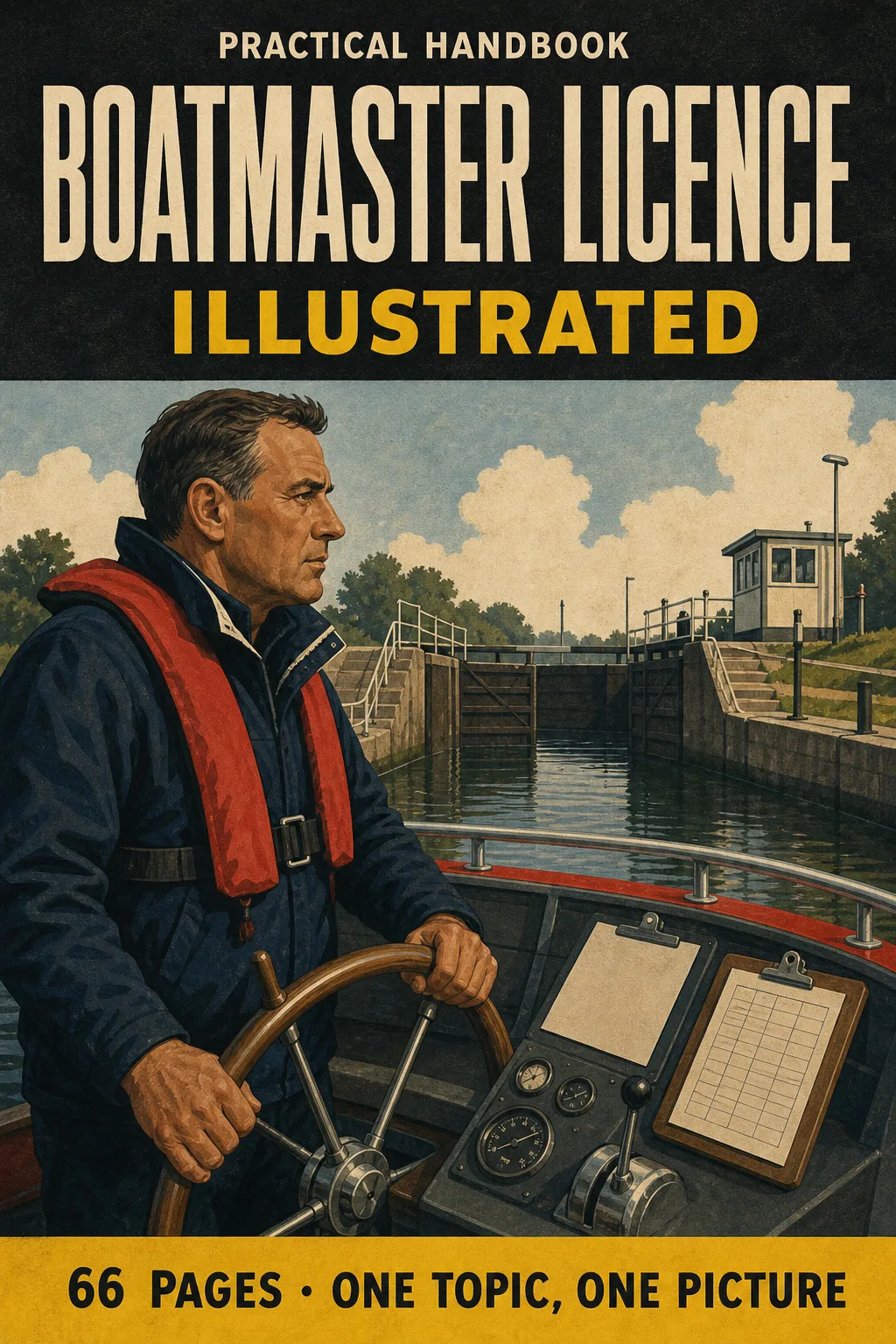
Boatmaster Licence, Drawn: the Collision Regs, Buoyage and Tides in the Same Order Every Time One Topic on Every Page

Collision rules, lights and shapes, IALA buoyage, the rule of twelfths, prop walk, berthing into the stream, man overboard and Mayday. Every topic has its own page: the drawing first, then what you need to remember. 66 illustrated pages.

START STUDYING THIS WAY

🔒 Secure checkout · PDF by email · 30-day guarantee

Every topic, its own pageEach rule, light and manoeuvre drawn, with the explanation beside it
66 illustrated pages9 parts, from Tier 1 and Tier 2 to the night before the oral
Up-to-date sourcesSI 2015/410, the COLREGs (MSN 1781) and IALA Region A
PDF by emailFormat

Look Inside the Book

Every page has one large drawing and a box with the rules, numbers and steps you need to know:

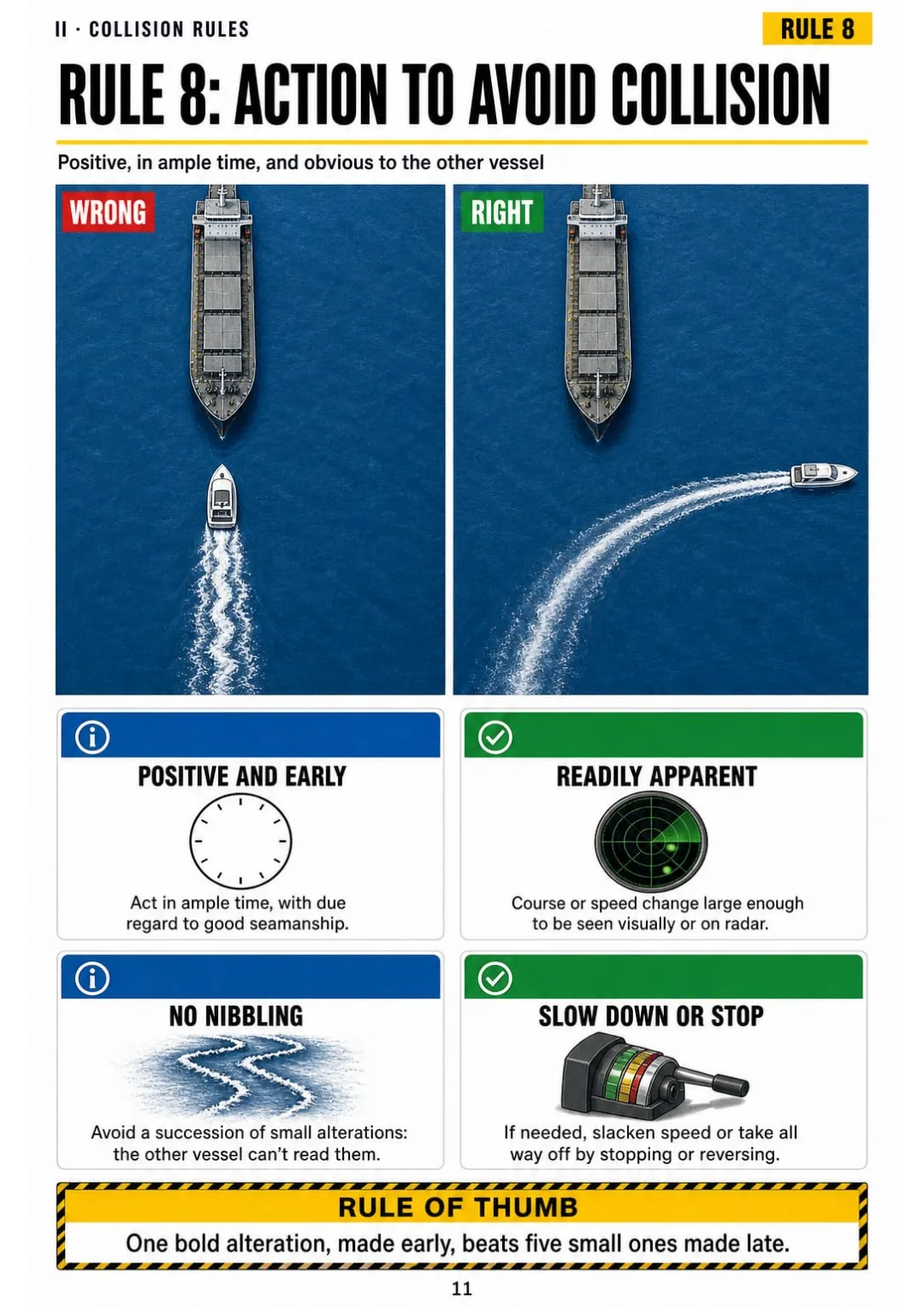
Rule 8: positive, early, readily apparent; avoid a succession of small alterations.
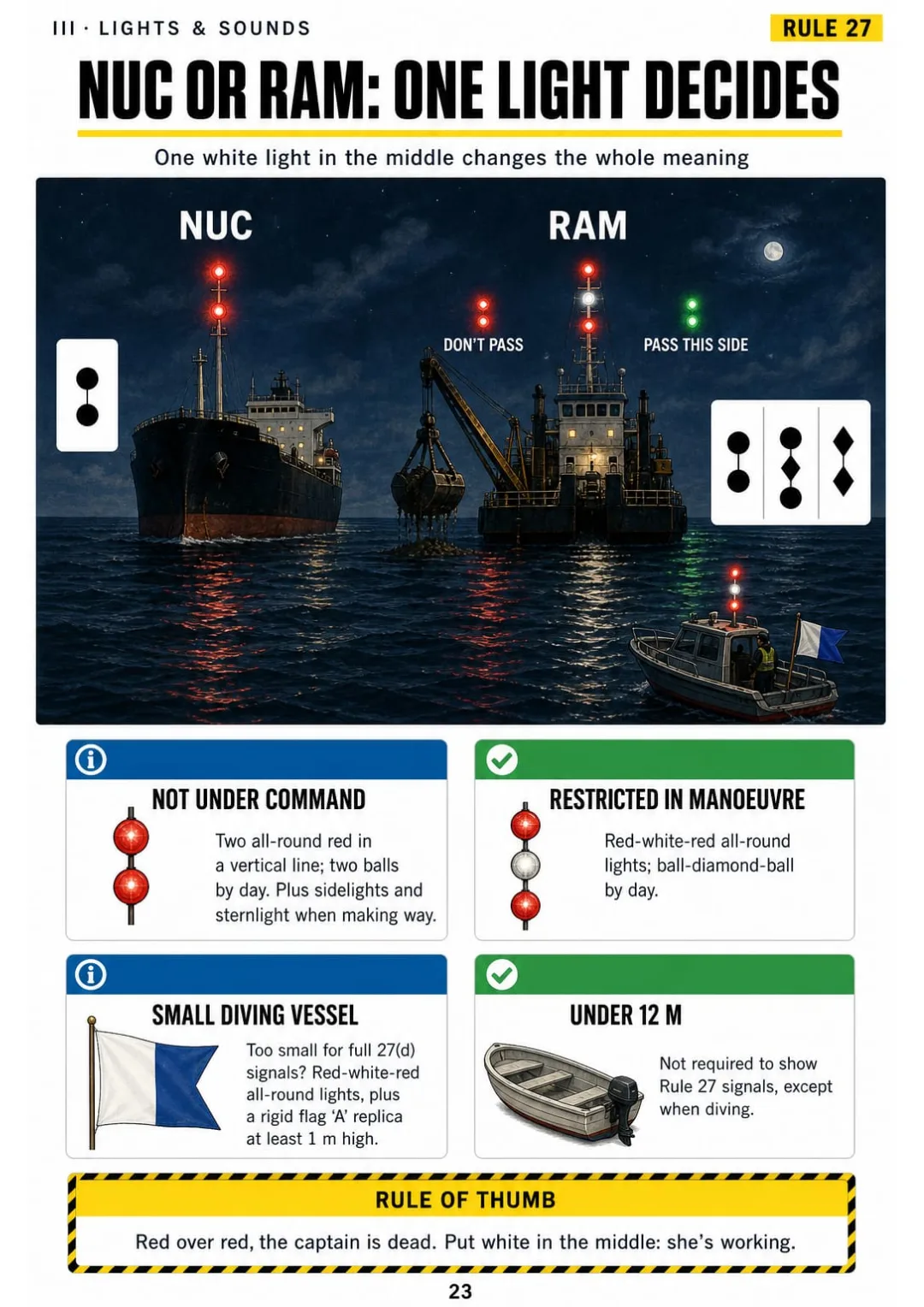
NUC: two all-round red, two balls. RAM: red-white-red, ball-diamond-ball.
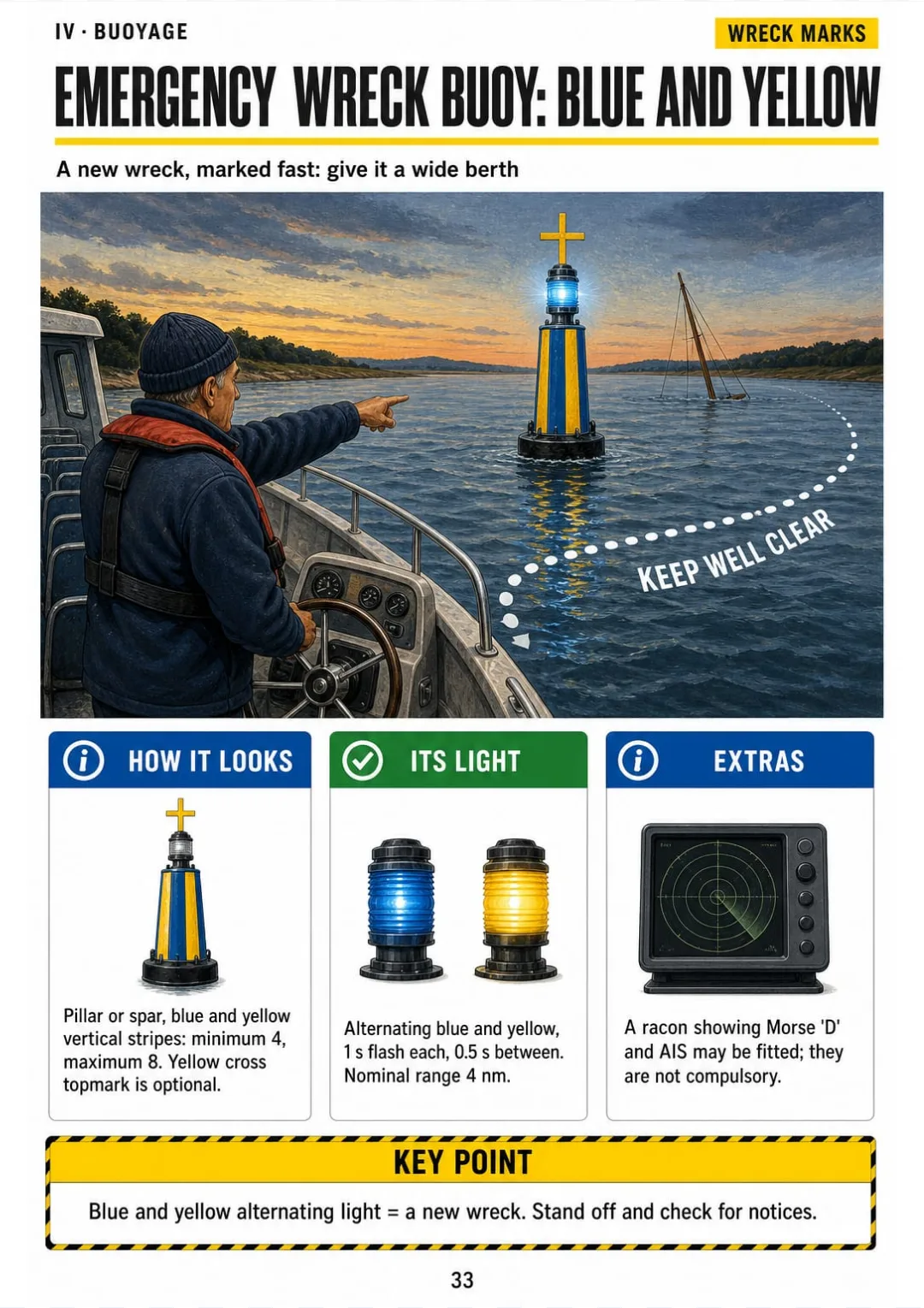
Wreck buoy: blue and yellow stripes, alternating blue/yellow light, 1 s each, range 4 nm.
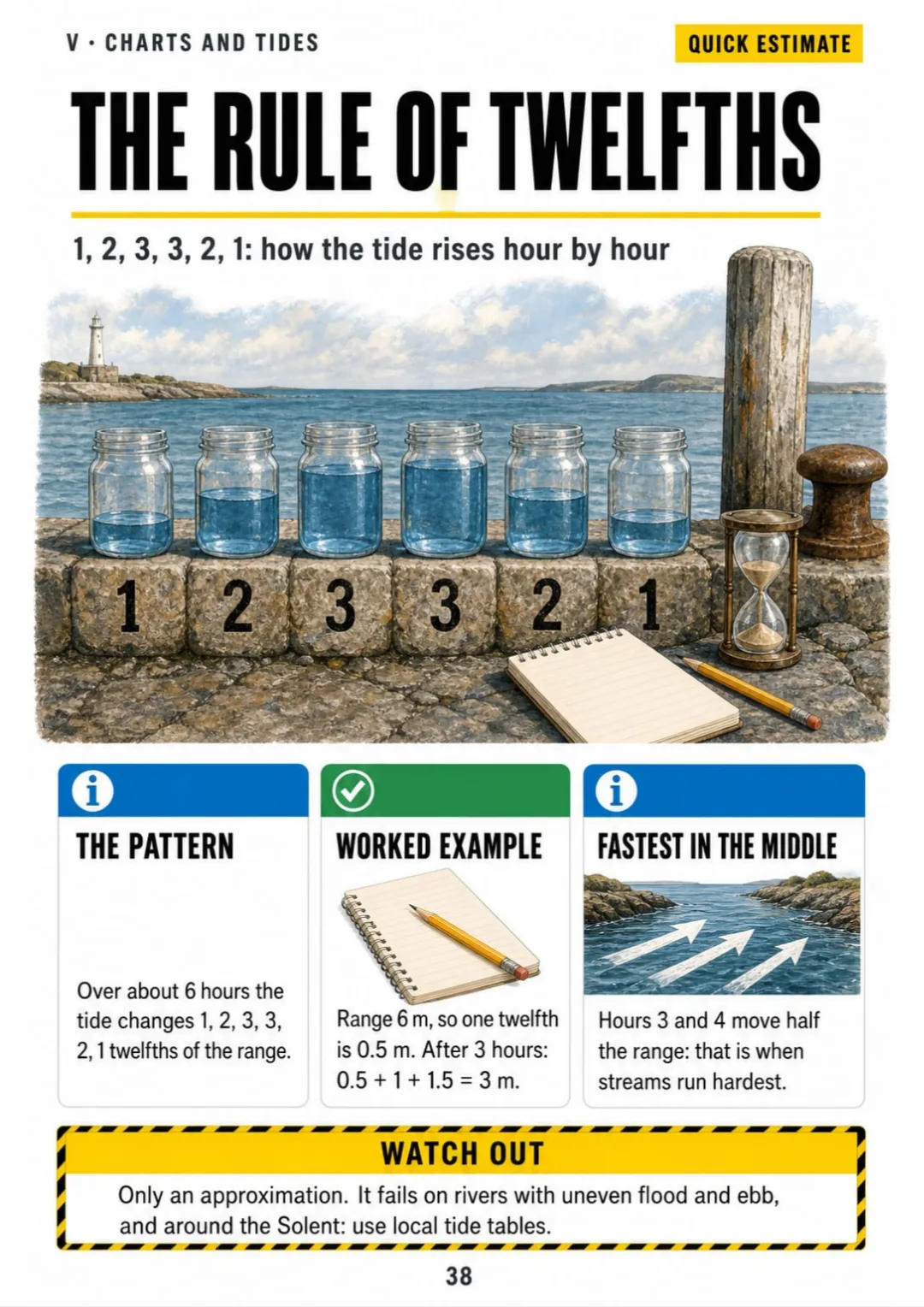
Range 6 m: 0.5, 1, 1.5, 1.5, 1, 0.5 m hour by hour.
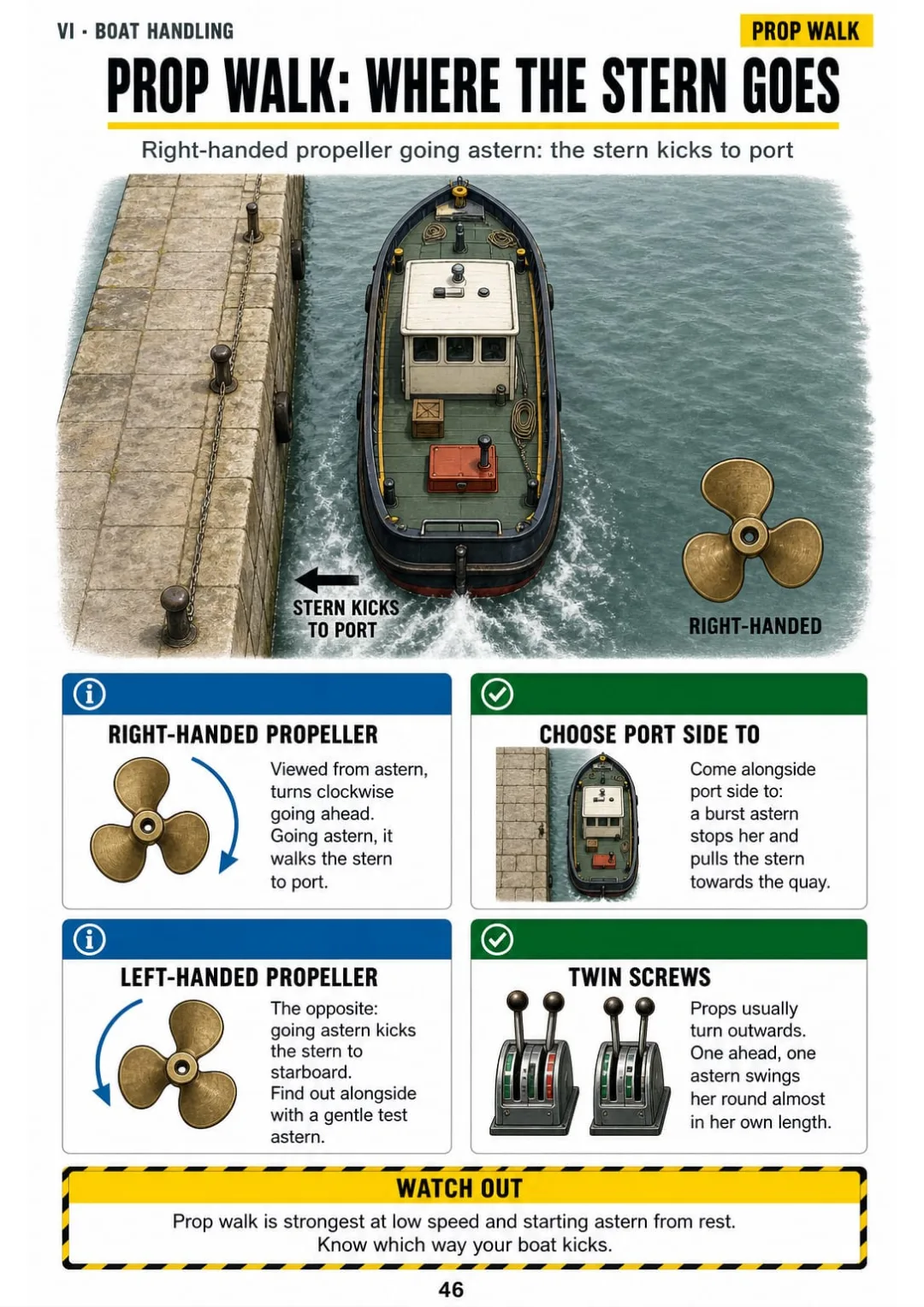
Right-handed prop astern = stern to port, so berth port side to.
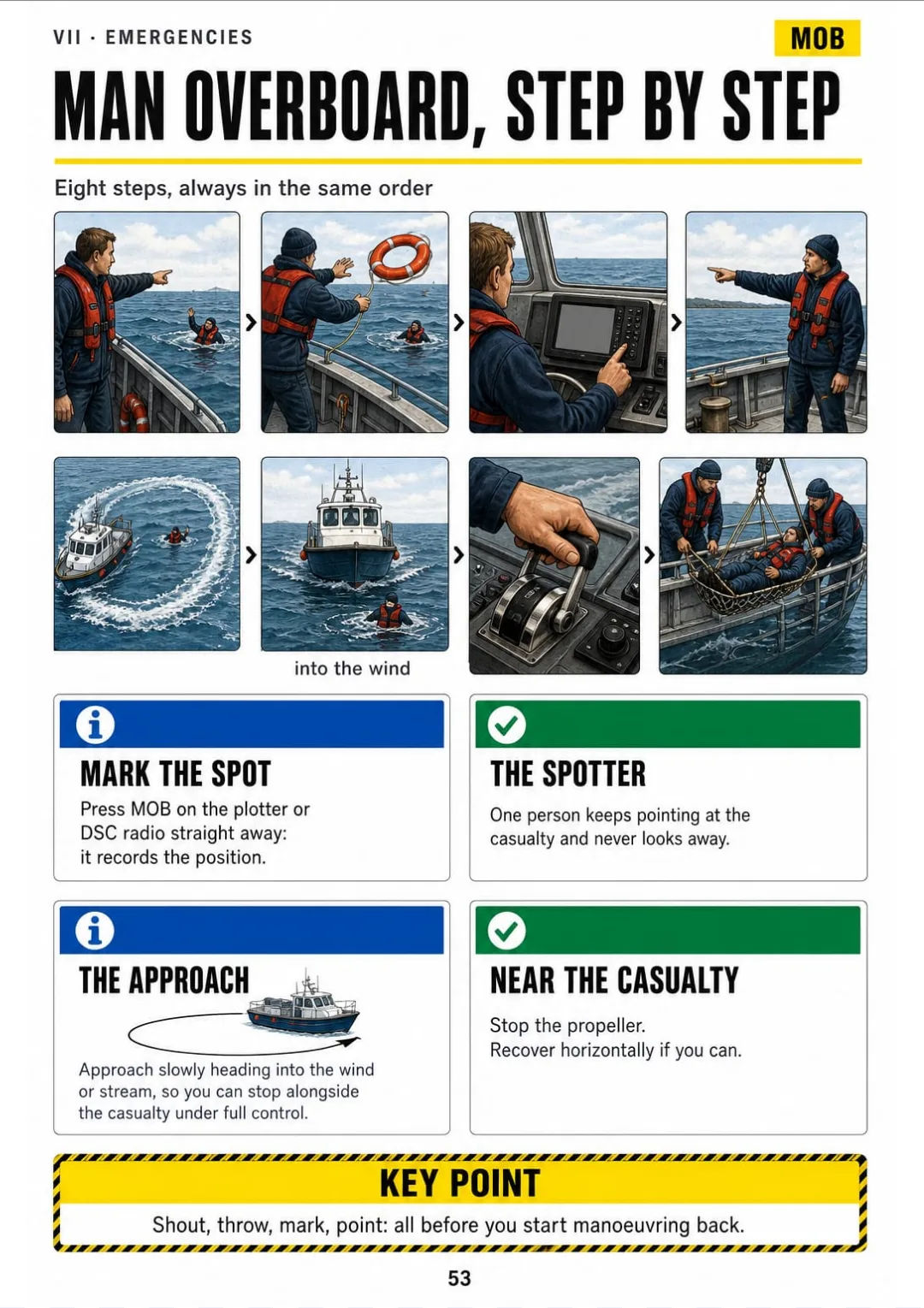
Shout, throw, mark, point, return, approach, stop the prop, recover flat
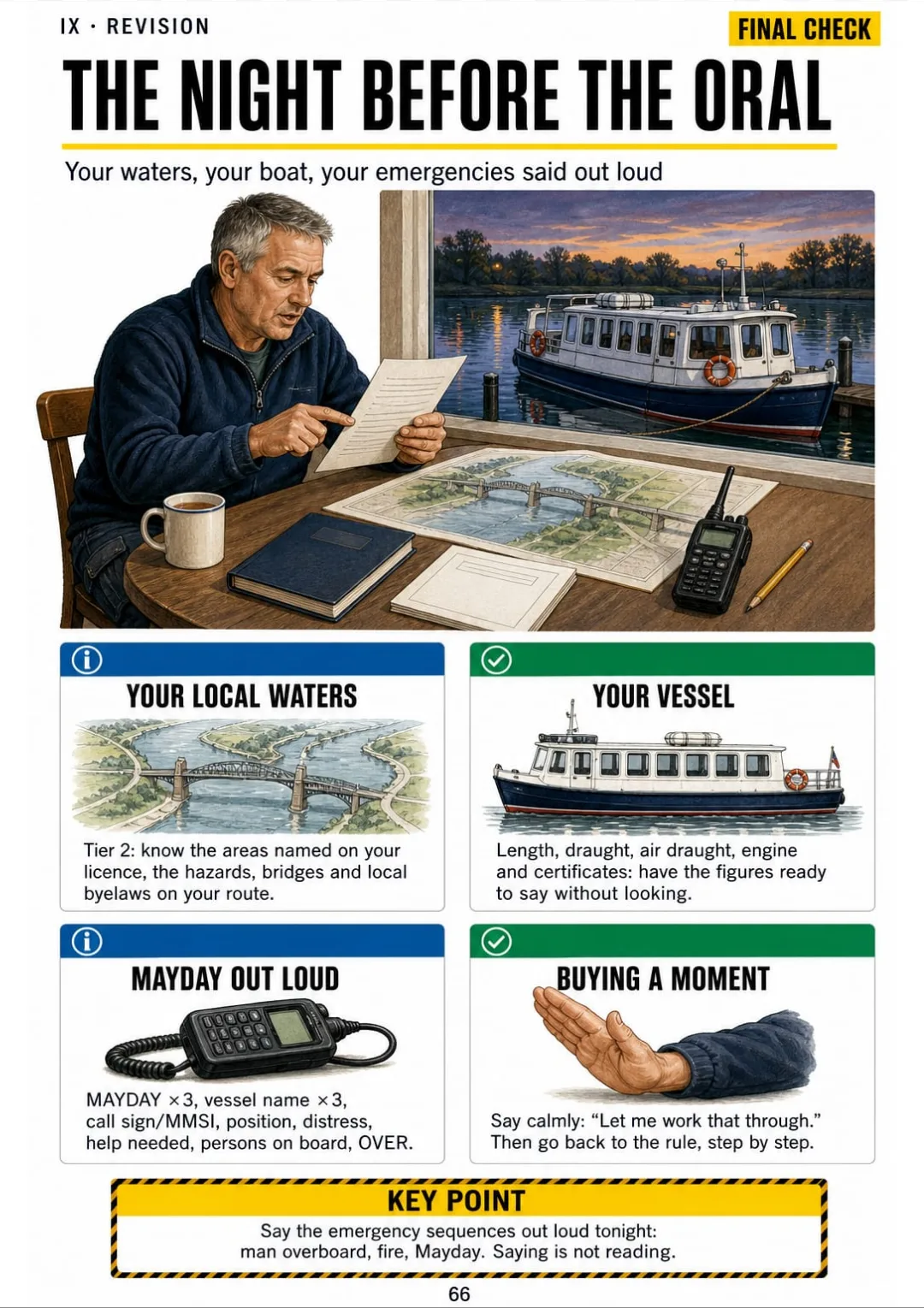
Local waters, bridges, vessel details, Mayday order and a calm phrase for a pause

Swipe to see more →

These are real pages from the book. The table of contents is the full one: 9 parts and 62 topics.

The Problem Isn't You. It's How It Was Explained to You.

You're on the water and a black-and-yellow pillar buoy comes up off the bow, two cones on top. You know it's a cardinal, but which side do you pass?

The manual gives it to you in paragraphs: topmarks, colours, quadrants, light characteristics. Four marks described in words, and in your head they keep swapping places.

Wreck buoy: blue and yellow stripes, alternating blue/yellow light, 1 s each, range 4 nm.

In the book, cardinal marks are one page: the four buoys drawn round a danger, cones up for north, down for south, base to base for east, point to point for west. The black is where the cones point.

The same goes for Rule 17, the lights of a vessel not under command, the rule of twelfths, prop walk and man overboard: each one has its own page.

You see the buoy, you see where the black is and you pass on the named side. No going back to the manual to check.

COMPARE FOR YOURSELF

The Same Topic, Two Ways to Study It

THIS
  • The manual: line after line
  • Lights and shapes explained only in words
  • You go into the oral with doubts
A vessel not under command shall exhibit two all-round red lights in a vertical line where they can best be seen and, when making way through the water, in addition sidelights and a sternlight; by day, two balls or similar shapes in a vertical line. A vessel restricted in her ability to manoeuvre shall exhibit three all-round lights in a vertical line, the highest and lowest of which shall be red and the middle white, and by day three shapes in a vertical line, the highest and lowest balls and the middle a diamond.
FOR THIS
  • NUC and RAM side by side in one drawing
  • The lights and day shapes in a box
  • You see it and you get it
NUC: two all-round red, two balls. RAM: red-white-red, ball-diamond-ball.
CONTENTS

Take a Look at the 9 Parts and 62 Topics

Your BML and the assessment, collision regulations, lights and sound signals, buoyage, charts and tides, boat handling, emergencies, the law and revision for the oral: 66 pages, all illustrated.

IYour BML and the Assessment · pp. 5-8
  1. Tier 1 and Tier 2 on one page
  2. Level 1 or Level 2: the four water categories
  3. Endorsements: what your licence lets you do
  4. The oral assessment: what the examiner wants to hear
IICollision Regulations · pp. 9-18
  1. Rules 5 and 6: lookout and safe speed
  2. Rule 7: is there a risk of collision?
  3. Rule 8: action to avoid collision
  4. Rule 9: narrow channels and fairways
  5. Rule 13: overtaking
  6. Rule 14: head-on
  7. Rule 15: crossing
  8. Rules 16 and 17: give-way and stand-on
  9. Rule 18: who keeps clear of whom
  10. Rule 19: restricted visibility
IIILights, Shapes and Sound Signals · pp. 19-27
  1. The arcs: 225°, 112.5° and 135°
  2. Power-driven vessel underway
  3. Sailing vessels and small craft
  4. Towing and pushing
  5. Not under command and restricted in ability to manoeuvre
  6. Constrained by draught, pilot and fishing vessels
  7. At anchor and aground
  8. Manoeuvring and warning signals
  9. Sound signals in fog
IVBuoyage and Marks · pp. 28-34
  1. IALA Region A lateral marks
  2. Direction of buoyage
  3. Cardinal marks: shapes and colours
  4. Cardinal lights: the clock face
  5. Isolated danger, safe water and special marks
  6. Emergency wreck marking buoy
  7. Reading light characteristics on the chart
VCharts, Tides and Planning · pp. 35-45
  1. Chart datum, charted depth and drying height
  2. Springs and neaps
  3. Reading the tide tables
  4. The rule of twelfths
  5. Height of tide at a given time, in 5 steps
  6. Underkeel clearance: can I get over it?
  7. Air draught: can I get under the bridge?
  8. Tidal streams: diamonds and atlases
  9. Compass, variation and deviation
  10. Weather: forecasts, Beaufort and wind against tide
  11. Passage planning: appraise, plan, execute, monitor
VIBoat Handling · pp. 46-51
  1. Prop walk
  2. Pivot point and turning in a tight space
  3. Wind or stream: which one wins?
  4. Berthing into the stream
  5. Mooring lines and leaving a berth on a spring
  6. Anchoring and interaction
VIIEmergencies and Passenger Safety · pp. 52-59
  1. Passenger safety briefing and headcount
  2. Man overboard, step by step
  3. Cold water: the 1-10-1 rule
  4. Mayday by VHF and DSC
  5. Pan-Pan, Sécurité and talking to HM Coastguard
  6. Fire on board
  7. Collision, grounding and flooding: first actions
  8. Distress signals and abandoning the vessel
VIIILaw and Duties of the Boatmaster · pp. 60-62
  1. Hours of work and rest
  2. Alcohol and drugs: the professional limits
  3. Pollution and reporting accidents
IXRevision for the Oral · pp. 63-66
  1. Lights and shapes at a glance
  2. Sound signals and buoyage at a glance
  3. Tidal calculations: the checklist
  4. The night before the oral

One Page, One Topic, All Clear

Think of it this way:

It's your oral and the examiner says: high water at 14:20, a six-metre range. How far has the tide dropped by 16:20? You need the rule of twelfths, and you need it now.

In the book you open the rule of twelfths page and see the curve drawn hour by hour: half a metre in the first hour, one in the second. One and a half metres down by 16:20.

Right-handed prop astern = stern to port, so berth port side to.

The same with Rule 15 crossing, cardinal marks, prop walk, berthing into the stream and a Mayday call: each one on its own page.

Boatmaster Licence Illustrated is 9 parts and 66 pages, all drawn, with revision pages for the oral at the end.

What you see drawn, you don't have to memorize.

What's Inside Boatmaster Licence Illustrated:

Ipp. 5-8

Your BML and the Assessment

Tier 1 and Tier 2, Level 1 and Level 2, the four water categories, endorsements and what the examiner wants to hear at the oral.

IIpp. 9-18

Collision Regulations

Lookout and safe speed, risk of collision, action to avoid it, narrow channels, overtaking, head-on, crossing, give-way and stand-on, and restricted visibility.

IIIpp. 19-27

Lights, Shapes and Sound Signals

The light arcs, power-driven and sailing vessels, towing, NUC and RAM, constrained by draught, pilot and fishing vessels, anchored and aground, and sound signals.

IVpp. 28-34

Buoyage and Marks

IALA Region A lateral marks, direction of buoyage, cardinal marks and their lights, isolated danger, safe water, special and wreck marks, and light characteristics.

Vpp. 35-45

Charts, Tides and Planning

Chart datum, springs and neaps, tide tables, the rule of twelfths, height of tide in 5 steps, underkeel clearance, air draught, tidal streams, compass, weather and passage planning.

VIpp. 46-51

Boat Handling

Prop walk, pivot point, wind against stream, berthing into the stream, mooring lines, springing off, anchoring and interaction.

VIIpp. 52-59

Emergencies and Passenger Safety

Passenger briefing and headcount, man overboard, cold water, Mayday, Pan-Pan and Sécurité, fire, collision, grounding, flooding and abandoning the vessel.

VIIIpp. 60-62

Law and Duties of the Boatmaster

Hours of work and rest, alcohol and drug limits, pollution and reporting accidents.

IXpp. 63-66

Revision for the Oral

Lights, shapes, sound signals and buoyage at a glance, the tidal calculations checklist and the night before the oral.

At the end of the book: Revision pages for the oral: lights, shapes, sound signals and buoyage at a glance, plus a 7-step tidal calculations checklist.
Plus: 2 Free Books

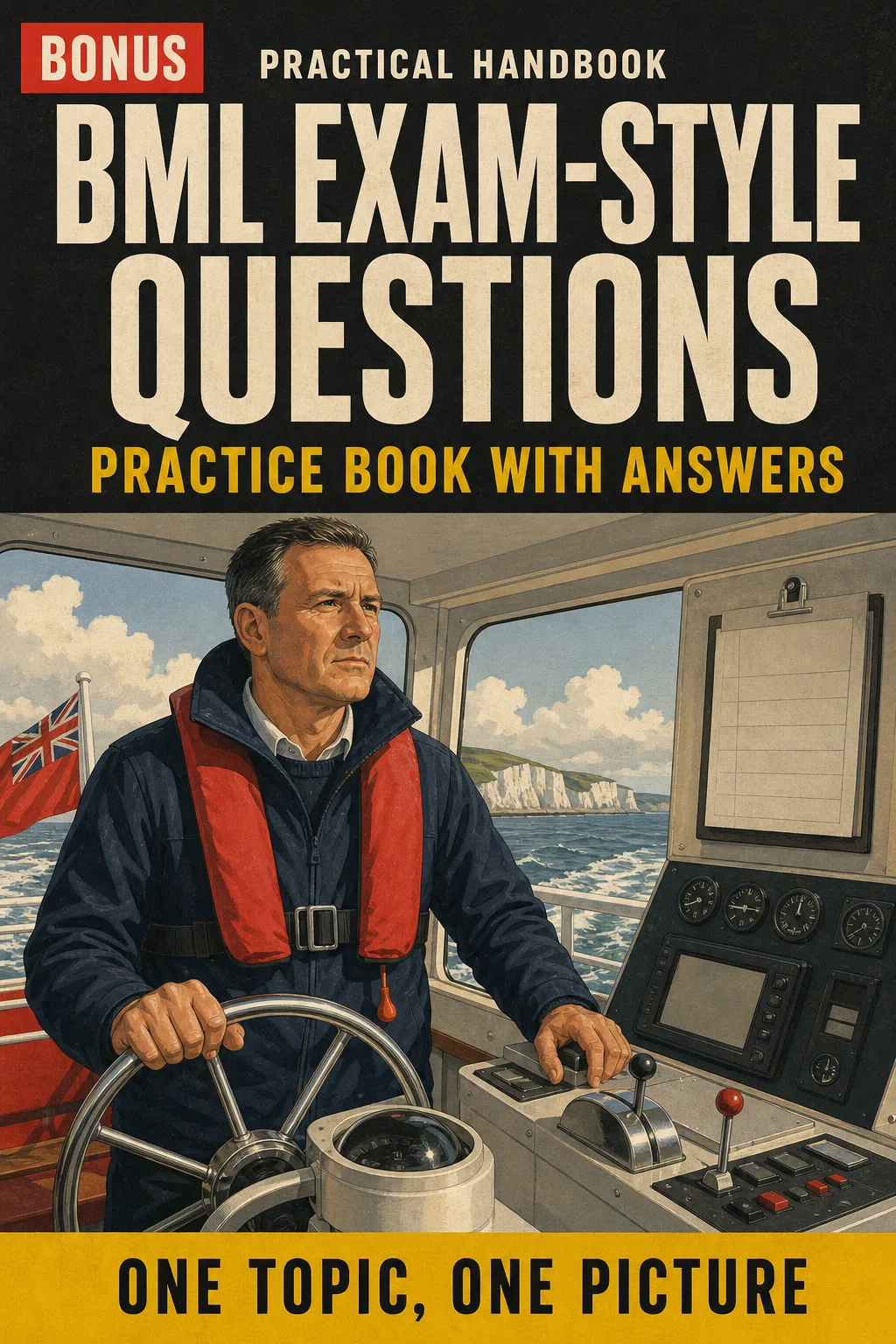
BML Exam-Style Questions: Practice Book with Answers

BONUS 1: «BML Exam-Style Questions: Practice Book with Answers»

Value on its own: US$ 17.90

Practise the kind of questions you'll be asked on lights, buoyage, tides and emergencies, with a clear answer and the page to revise for each one.

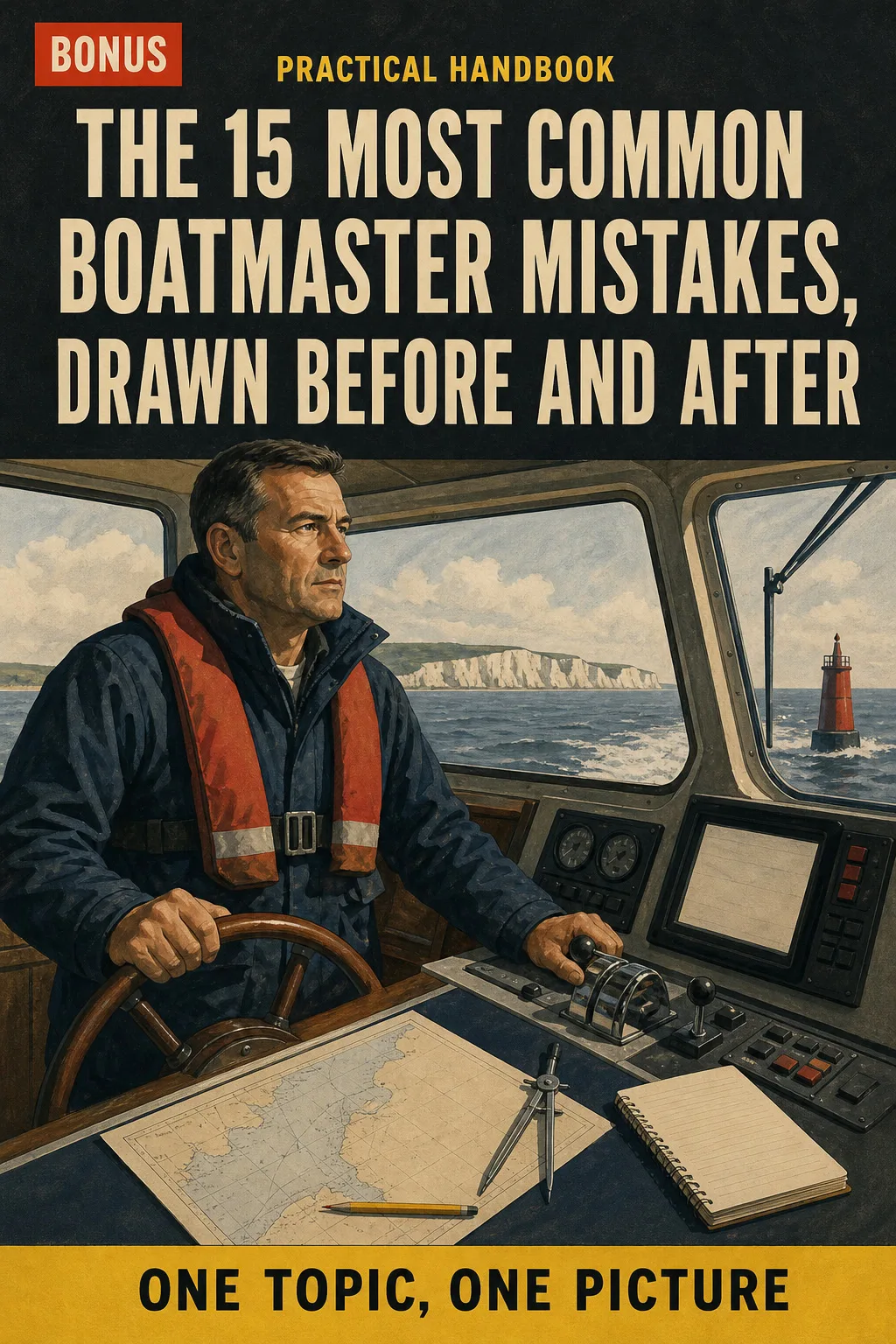
The 15 Most Common Boatmaster Mistakes, Drawn Before and After

BONUS 2: «The 15 Most Common Boatmaster Mistakes, Drawn Before and After»

Value on its own: US$ 14.90

See the mix-ups that catch people out most often, like port and starboard marks or a vessel's lights, with the wrong way and the right way side by side.

Boatmaster Licence Illustrated with 2 Free Books

  • Boatmaster Licence Illustrated: 66 illustrated pagesUS$ 63
  • BONUS 1: BML Exam-Style Questions: Practice Book with AnswersUS$ 17.90
  • BONUS 2: The 15 Most Common Boatmaster Mistakes, Drawn Before and AfterUS$ 14.90
  • High-resolution PDF to printIncluded
Total value US$ 95.80
YOUR PRICE:
US$ 27
You save US$ 68.80
YES, I WANT BOATMASTER LICENCE ILLUSTRATED FOR US$ 27

📄 This is a digital PDF book sent to your email: nothing is printed or shipped.

Secure purchaseEncrypted payment30-day guarantee

PDF by email: We email you Boatmaster Licence Illustrated as a PDF, together with the two free books. It's a single payment: no installments, no extra charges.

Who This Book Is For

You're studying for your BML

You're studying for your BML

Every rule, light and mark on its own page, so you build the syllabus one drawing at a time instead of wading through the regulations.

Your oral is coming up

Your oral is coming up

The revision pages put lights, shapes, buoyage and the tidal checklist at a glance, so you can go over it all the night before.

You already work on the water

You already work on the water

You know the boat. The book gives you the rules and procedures in the same order every time, so you can explain what you already do.

Everything You Get Today

US$ 95.80US$ 27
YES, I WANT BOATMASTER LICENCE ILLUSTRATED FOR US$ 27

📄 This is a digital PDF book sent to your email: nothing is printed or shipped.

30DAYS
GUARANTEE

30-Day Guarantee

Try Boatmaster Licence Illustrated for 30 days, bonus books included.

We refund everything if the file won't open, if the book isn't what you see here, if you were charged twice or if the email doesn't arrive. Just email us.

You pay once. No subscriptions.

Frequently Asked Questions

Is it for me if I've been running boats for years and just need the licence?

Yes. It isn't a beginner's book: it puts the collision rules, lights, buoyage, tides and emergency procedures in order, so you can explain what you already do. It covers Tier 1 and Tier 2, Level 1 and Level 2. The tidal pages in part 5 are what Level 2 adds; everything else applies on non-tidal water too. Local byelaws and local knowledge for your area aren't in it: your operator or navigation authority covers those.

Where does the content come from?

It's checked against the Boatmasters' Qualifications Regulations (SI 2015/410) and current MCA guidance, the COLREGs as applied in the UK (MSN 1781) and the IALA Region A buoyage system.

Is it official material?

No. It's an independent study book. It isn't published, approved or endorsed by the MCA or any navigation authority, and it doesn't give you a certificate or count towards your licence: that comes from your MCA assessment.

Does it replace the training course?

No. It doesn't replace approved training, sea time, your first aid and safety courses or the local knowledge your area requires. It's for studying and revising alongside them.

Are the practice questions the ones in the exam?

No. They're written for this book, covering the kinds of topics candidates get asked about, with an answer and the page to revise for each one.

When and how does it arrive?

The book and the 2 free books arrive as a PDF by email, to the address you enter at checkout.

Do I have to pay every month?

No. It's a one-off payment. No subscription.

Can I have it on paper?

Yes. It's a PDF you can print at home or at a print shop and keep on board.

How does the refund work?

You have 30 days. We refund everything if the file won't open, if the book isn't what you see on this page, if you were charged twice or if the email doesn't arrive: just email us.

Before You Close This Page

No more rereading without anything sticking.

Cardinal marks, lights and tides: you see them drawn and that's it.

You walk into the oral knowing where everything is.

Drawings make studying faster.

The book is right below.

One-time payment: US$ 27 · Guarantee: 30 days · PDF by email

YES, I WANT BOATMASTER LICENCE ILLUSTRATED FOR US$ 27

📄 This is a digital PDF book sent to your email: nothing is printed or shipped.